Workshop Diary
What I built, how I built it
The articles here are not marketing copy. They are my design decisions, the bugs that cost me hours and the technical notes I wrote down.
 FEATURED
How to Manufacture a Machine from Scratch: A Workshop Diary
The road from an idea to a working machine: design, prototype, revision and production stages told realistically.
 Healthcare
ACIL CBR: Smart In-Hospital Call System
Installation of the entire chain from the call button to the on-screen alarm, and the reporting infrastructure.
 Healthcare
Visual Enhancement and Distraction Unit: Calming Children in the Emergency Department
Design and usage details of the visual attention unit that makes procedures on a crying child easier.
 Healthcare
Visual Response Audiometry: Hearing Testing in Patients Who Cannot Cooperate
The working logic of hearing assessment with visual stimuli in babies and patients who cannot communicate.
 Machine
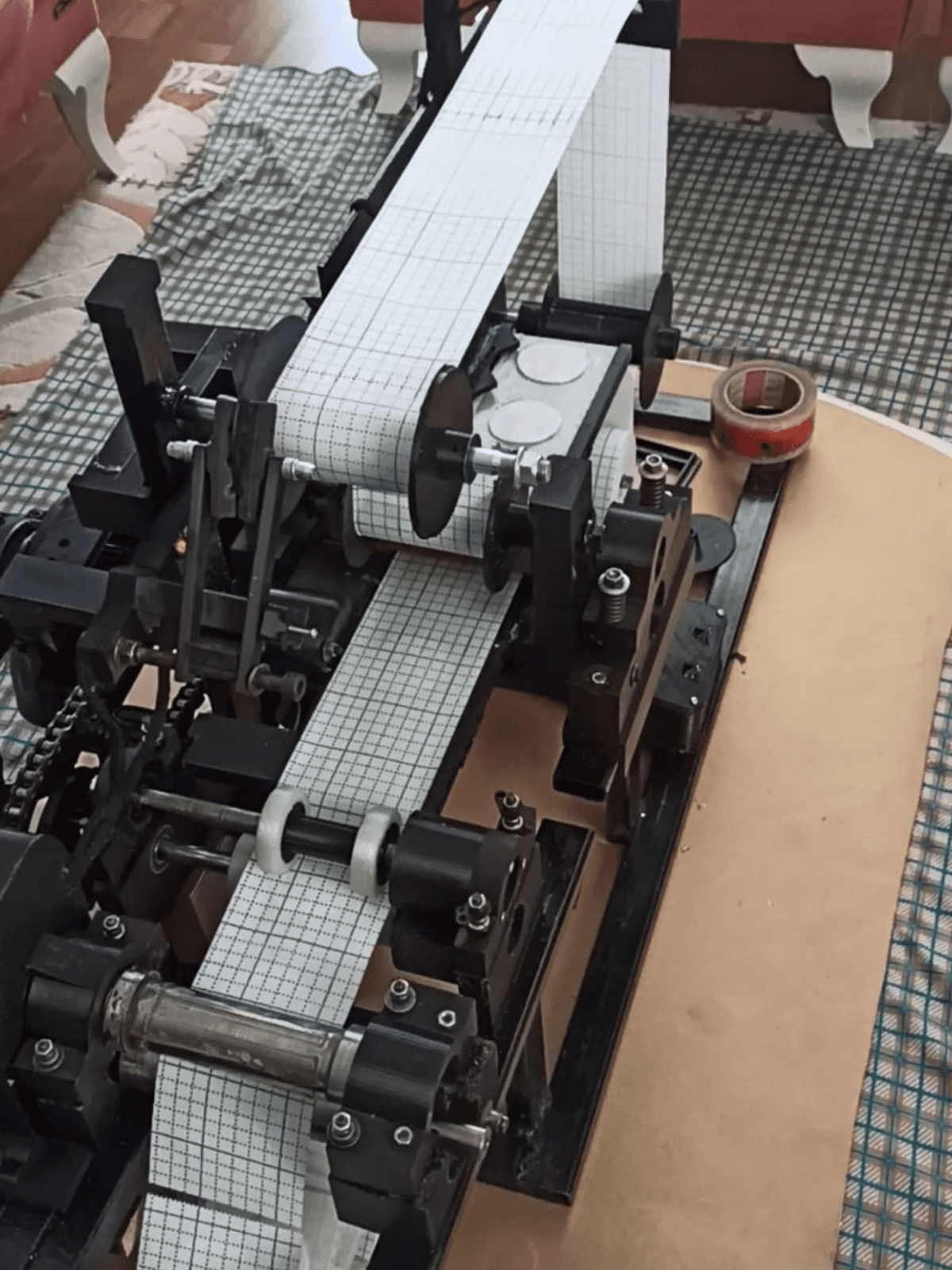
Cupping Pad Machine: Full Automation in the Production of Bandages with Pads and Leech Pads
The story of an automation project that connects coconut-coated pads, bandages with pads and leech pads on a single line.
 General
A Local Alternative to an Imported Device: Why Manufacturing Takes Long but Is Worth It
Copying an imported machine is easy, but understanding the need is hard. Advantages of local production and the real cost items.
 Technical
Stepper Motor Control with Arduino: 12 V MOSFET + Hall Sensor Safety Chain
How is position verification set up before the motor runs? Installing the safety chain between the TB6600, MOSFET and Hall sensor.
SoftwareSmart White Code System for Healthcare Staff: The ID Badge Idea
Why does the "Which doctor?" question in a hospital waste so much time, and how does a digital ID badge solve this problem?
 Machine
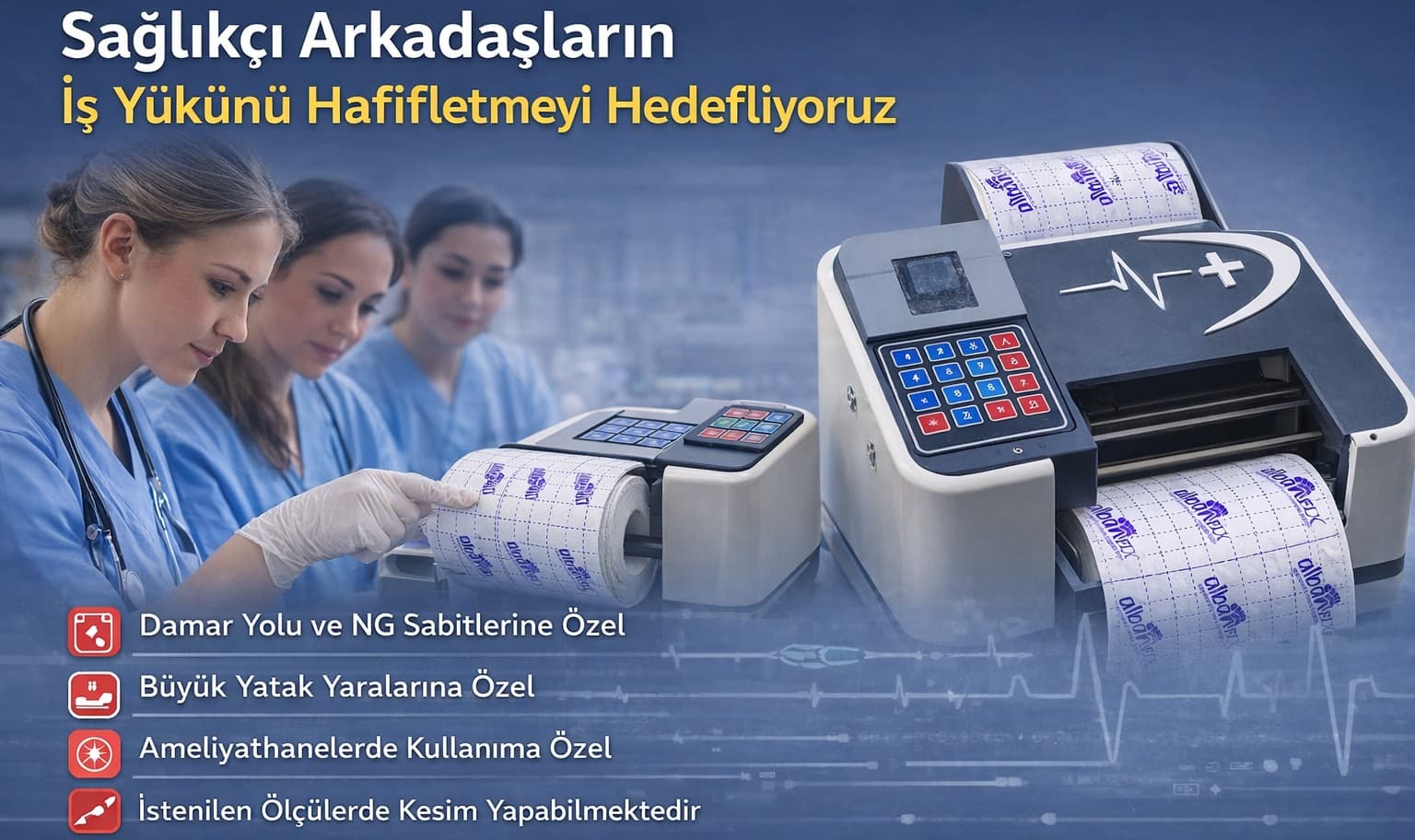
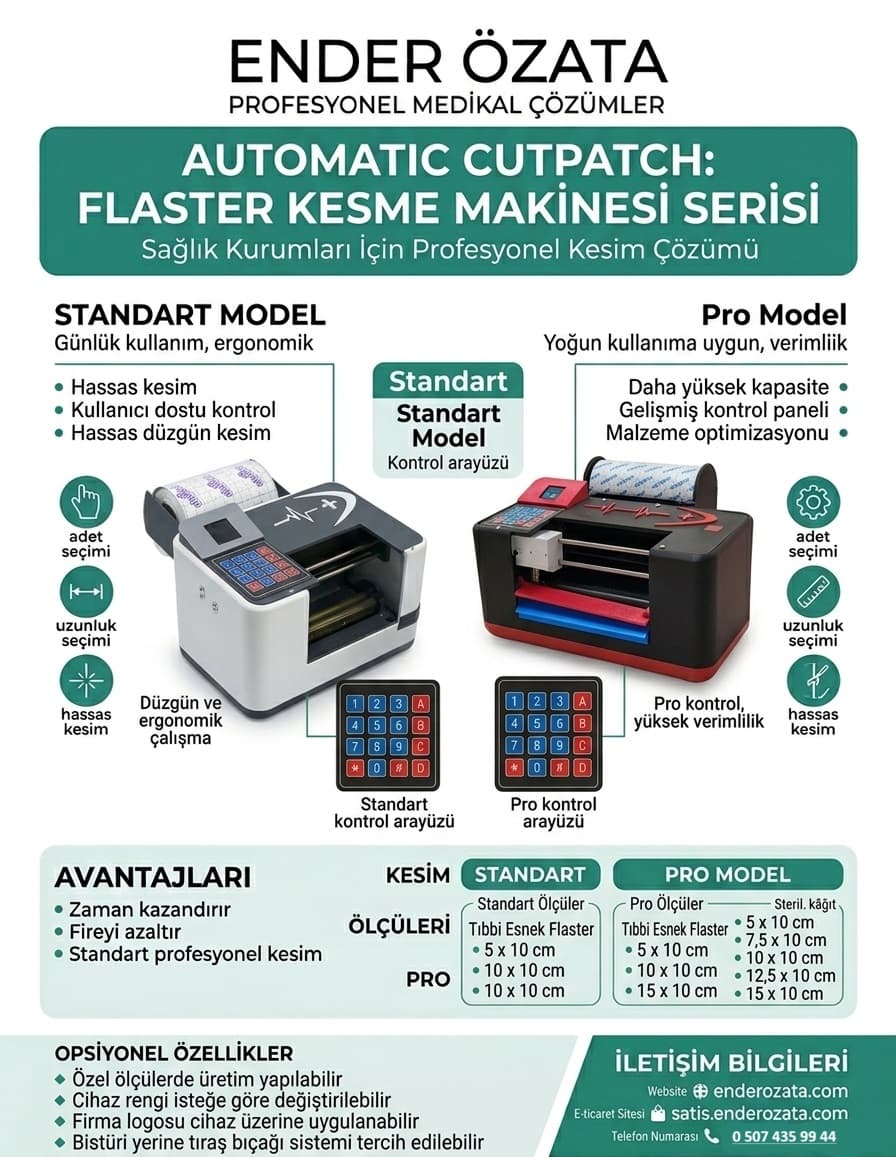
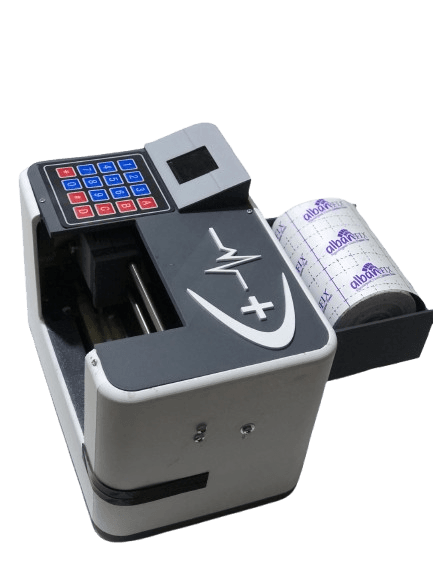
Bandage Cutting Machine: A Device That Turns 8 Hours of Hospital Work Into 8 Seconds
Why should medical bandages and pads not be cut by hand? The design decisions, mode structure and use cases of the Bandage Cutting Machine.
 3D
Producing Machine Parts with 3D Printing: PLA, TPU and SLA Compared
Which part should be printed from which material? A practical comparison in terms of speed, strength and cost.
FAQ
Frequently Asked Questions
I have gathered the most frequently asked questions here. If you cannot find the answer, message me on WhatsApp.
General
Yes. I provide operator training as part of delivery. You can also get technical support on the 24/7 WhatsApp line. The user manual is supplied with the device in Turkish.
All machines are delivered with a 12-month warranty. Software updates and technical support are free during the warranty period. Parts and support services continue after the warranty as well; you are not left on your own when you call.
Yes, most of our product line is custom-manufactured. Tell us your need; let us project the right solution and prepare a quotation. The design is made according to the dimensions, capacity and environment.
Pricing
Because there is no intermediary layer. Instead of importing a device and reselling it, I design it for you and manufacture it in my own workshop. Service and spare part costs also stay much lower.
Quotation
For standard products I issue a quotation on the same day. For custom manufacturing projects it can take 1–3 business days to produce a firm cost; in that case the validity period is stated on the quotation.
No. Preparing a quotation is free of charge. The advance payment taken at the start of the project covers only material and manufacturing costs.
Delivery
Yes. Shipping outside Turkey is possible. Customs and shipping processes are detailed at the quotation stage.
Yes. On-site installation, commissioning and operator training are provided free of charge when the machine is delivered. If your staff need additional training, support is provided.
Spare Parts
Send us the model you have and a photo. We manufacture original spare parts for all the models we produce. Printing a PLA part with 3D printing is often the fastest and cheapest solution.
Payment
Bank transfer / EFT, credit card and instalment options depending on the order size are offered. Custom manufacturing projects generally use a deposit (30–50%) and payment on delivery.