A product prepared by hand
Cupping pads are still largely prepared by hand today:
- The sheet is opened
- The pad is cut to the required size
- Adhesive is applied
- The pad is placed and pressed
- The product is brought to its final form
Every step depends on a person. A small error (the pad slipping, too much adhesive) turns the product into scrap.
Designing it as a line
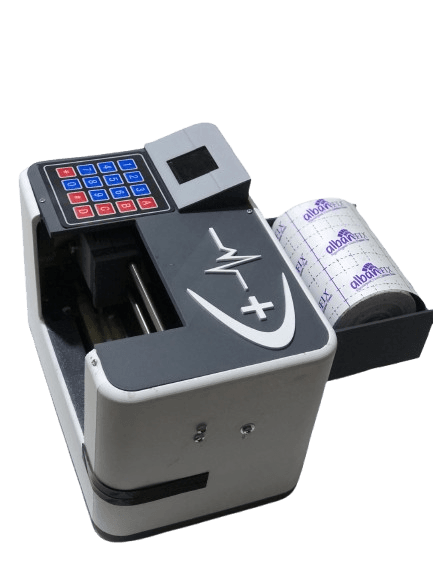
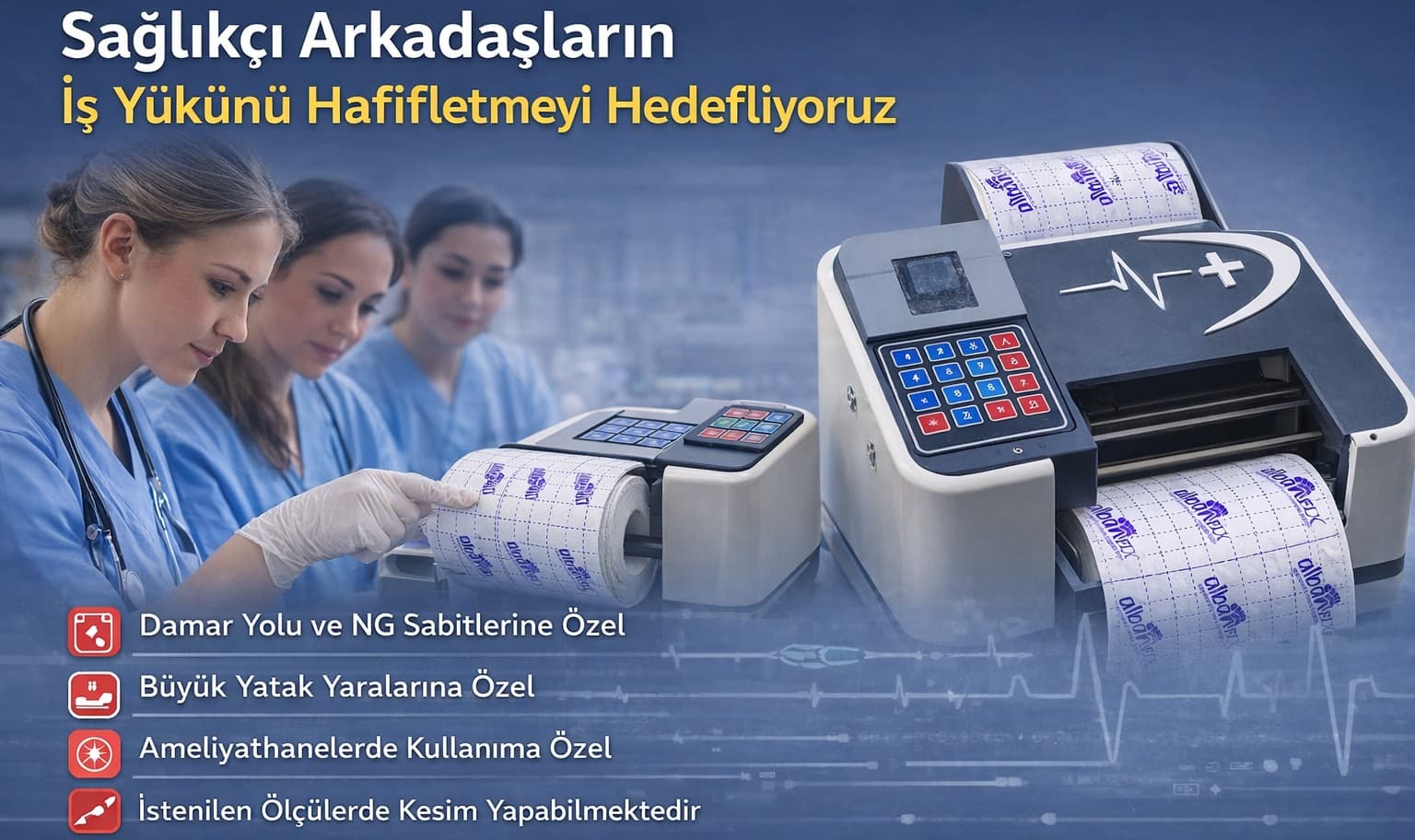
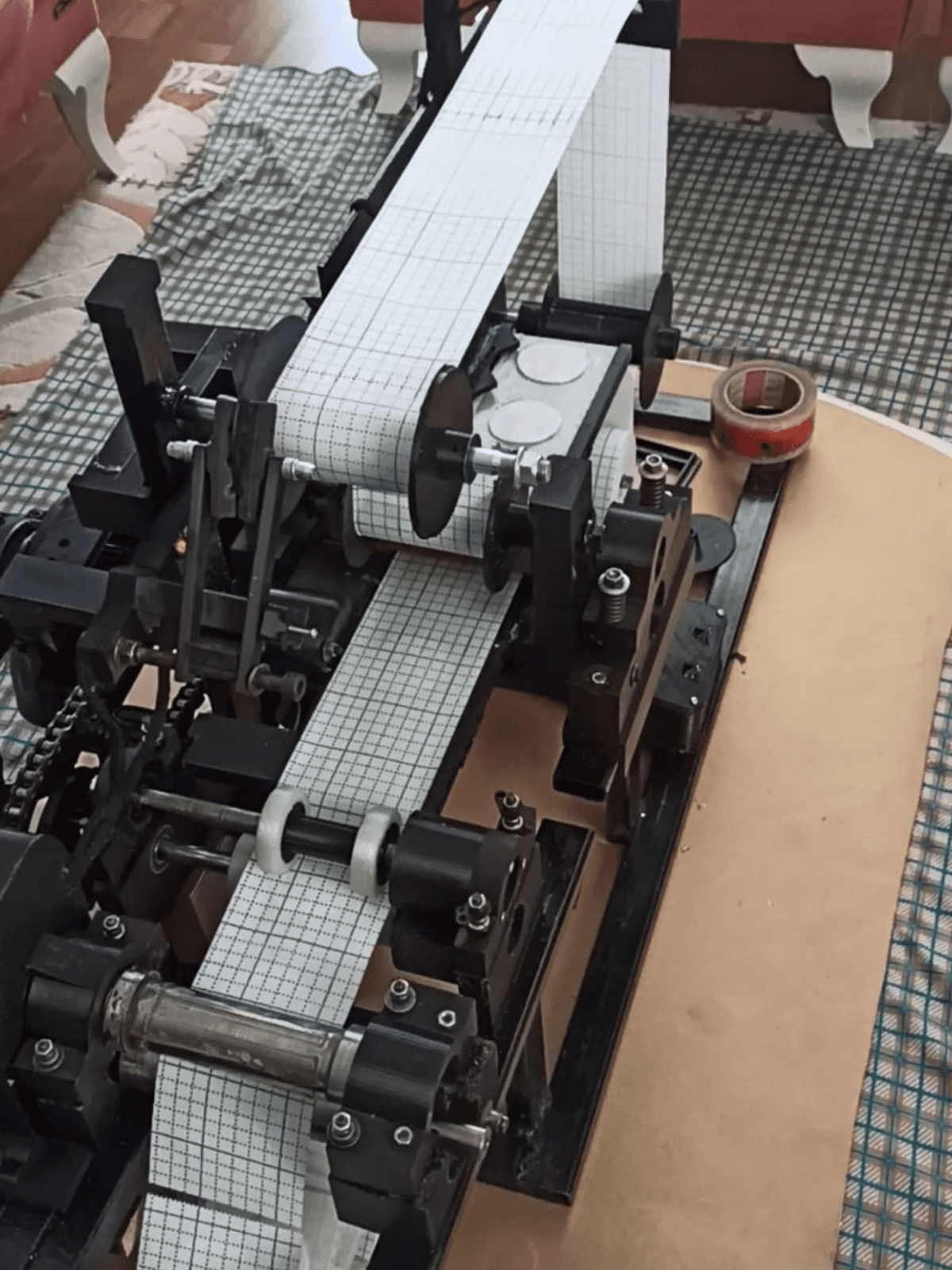
I saw this product not as a single operation but as a production line. The line consists of the following stations:
- Feeding — the raw sheet advances automatically
- Forming — the coconut shell is shaped with heat
- Dosage — the adhesive quantity is set parametrically
- Pad transfer — the pad is placed in the correct position
- Cutting — guillotine cutting in the requested format
- Counting — the produced quantity is counted automatically
The hardest part: the adhesive
Designing the mechanism took a week. Stabilising the adhesive took a month.
The relationship between viscosity, temperature and dispenser pressure changes depending on the product group. The solution was to keep the pressure constant and control the adhesive temperature. I also made this parametric on the software side.
Economic justification
Demand for these products grows every year, while supply is limited. Because producing them requires both knowledge and machinery. A facility using this machine reduces raw material cost significantly on standard products.
Status
Production lines have been built and put into service. Parametric recipes have been defined for different size and quantity requests.